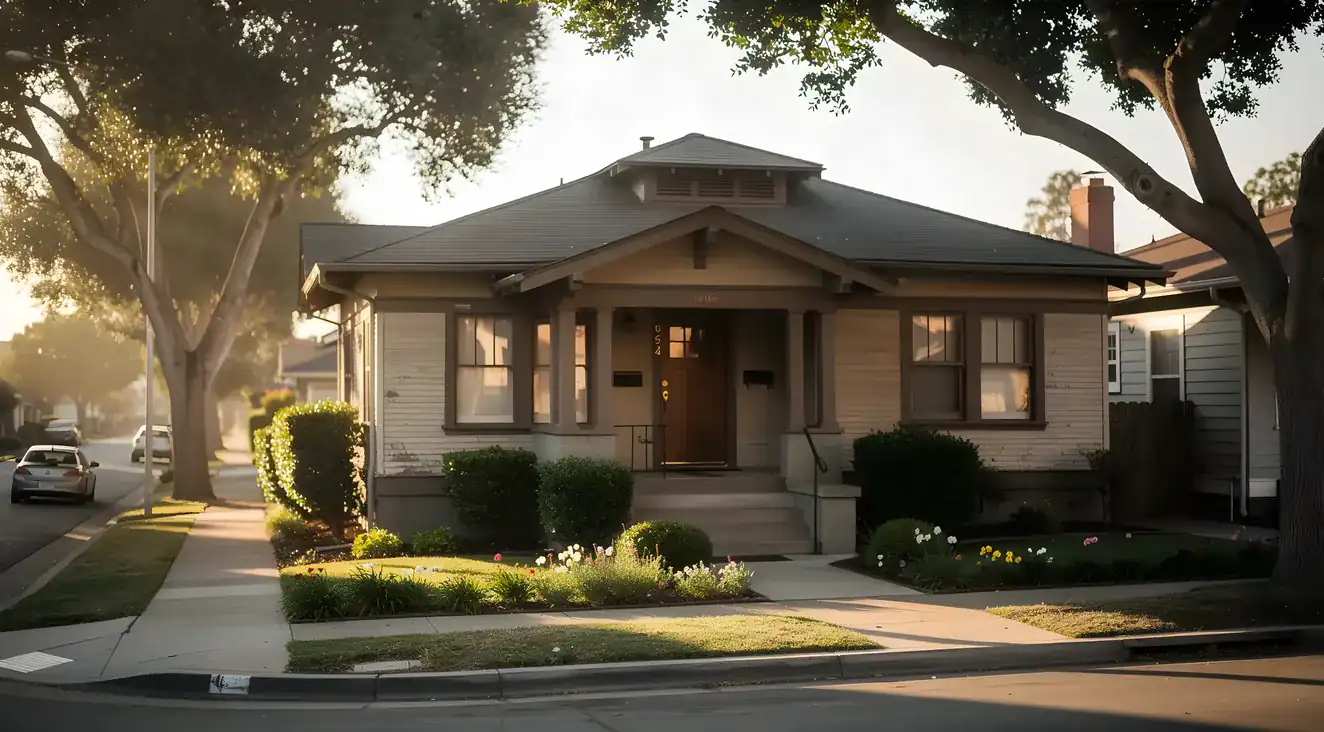
Under Proposition 19, inheriting a home in California no longer automatically preserves the parent’s low Proposition 13 assessed value: the child must move in as a primary residence and file a homeowners’ exemption within one year, or the property is reassessed to current market value.
Prior to Proposition 19, which took effect February 15, 2021, California estate laws allowed children to inherit their parents’ home and froze the property tax assessment at the parents’ prior Proposition (Prop) 13 value. The implementation of Prop 19 ended that broad protection, setting in motion several contingencies that must be met for children to avoid a reassessment of the inherited property’s value.
The requirements that must be met for child heirs to avoid a reassessment of property are that they must move into the home as a primary residence within one year of inheriting. They must also file a homeowner’s exemption within that same year. And despite both of those contingencies, the exclusion only shelters up to approximately a $1 million gap between the originally assessed and current market value. Any additional value over that threshold is reassessed.
With the rapid and significant rise in value in East Bay homes in the past two decades, this can be a significantly meaningful increase in property taxes. Certain provisions remain in place to protect child inheritors who are 55 and older. Even so, scheduling at least one consultation with an experienced estate planning attorney is the wisest course of action to minimize confusion and keep your family protected from unnecessary taxes, fees, or financial losses.
What Proposition 13 Protected (And Why Prop 19 Changed It)
California estate laws and regulations are living legal entities in the sense that they are fluid; no one law or proposition is set in stone, and Propositions 13 and 19 are examples of that.
One of the most significant roles of an estate plan is protecting heirs and beneficiaries from unnecessary taxation or probate fees incurred by a lack of estate planning. And, as real estate is often one of the most valuable assets comprising an estate, clear steps must be taken to keep inherited properties from unnecessary property tax reassessment, which can exponentially raise the property taxes owed by heirs and beneficiaries.
Prop 13 assessed value, established in 1978, is considered the “old rule” for inheriting a parent’s home in California. With this rule (ec. former R&T Code s63.1), children could inherit their parent’s home and retain the existing property value and tax fees, with no questions asked. From there, they were protected by capped property tax increases at 2% per year based on the original parent or parents’ purchase-price assessed value.
So, for example, A home purchased in Alameda in 1985 for $150,000 might carry an assessed value of $250,000-$350,000 today, while the market value is $1.2 million or more. That gap represents thousands of dollars per year in property tax savings. Then, in February 2021, voters adopted Prop 19 (November 2020 ballot, effective Feb 16, 2021). This proposition changed the protections set in place by Prop 13 in several ways, largely by adding a parent-to-child transfer exclusion and other contingencies.
Now, a well-built estate plan can work creatively with the specific mechanism Prop 19 modified (R&T Code sec. 63.1), serving as the income-tax counterpoint to property-tax savings. This is not a DIY estate planning situation because you must understand what a living trust is as well as have a sound, current understanding of taxes and trust distribution.
Big-picture estate planning solutions prevent the potentially negative outcomes families are trying to avoid.
The New Rule Under Proposition 19: Who Still Qualifies for the Exclusion
ℹ️ Two Conditions, Both Required
A child heir keeps the parent’s lower assessed value only by meeting both of these within one year of the transfer date: moving into the home as a primary residence, and filing a homeowner’s exemption with the county assessor. Meeting one without the other does not preserve the exclusion.
Understanding Prop 19’s new rule, two conditions must be met for reassessment exclusion, or the statutory carve-out that prevents a change in ownership from triggering a new assessed value. In other words, while a child can potentially inherit a property without the property taxes going up, certain conditions must be met.
Condition 1: The primary resident requirement
The first condition, the primary residence requirement, states that a child must inherit the property (grandchildren can only benefit from Prop 19 if their parent, the child of the grandparent, is deceased at the time of transfer). Once a child (or qualifying grandchild) inherits, they must move into the home as their prior residence within one year of the transfer date. The term “primary residence” means the inherited home can not serve as a vacation property, rental home, or that another home the child/grandchild owns elsewhere is kept as a “primary residence.”
Also, within one year of the transfer date, the child must file a homeowner’s exemption with the county assessor. This filing activates Prop 19 exclusion protection.
Condition 2: The $1 million cap
The second condition caps the amount of the homeowner’s exemption. So, even when the child moves in, claims the home as a primary residence, and files the homeowner’s exemption, the exclusion is not unlimited.
The exclusion covers the difference between assessed value and market value, but only up to approximately $1 million. This amount is adjusted annually by the Board of Equalization (BOE). Above that cap, the property is reassessed to market value.
So, for example, the Gold Coast Alameda bungalow you or your parents owned for 40 years may have a market value of $ 1.5M, but its current assessed value is $400K. This is a gap of $1.1M. The current Prop 19 exclusion covers $1M of the gap. Reassessment applies to $400K of the gap. Therefore, the new assessed value = $400K + $100K = $500K.
So, while that’s not the full $1.5M, it’s also not the original $ 400K either. And, in the East Bay, where median home prices have climbed well above $1M in many neighborhoods, the cap means partial reassessment is common even for children who do move in. That results in significant property tax increases.
The grandparent-to-grandchild version
We want to reiterate the grandparent-to-grandchild version of the exclusion. Grandchildren can benefit from this exclusion if they inherit a home from their grandparents if and only if all of their parents (their grandparents’ child/children) are deceased.
What Happens When the Child Does Not Move In?
⚠️ The One-Year Deadline Cannot Be Fixed Later
If the one-year window closes before a child moves in and files the homeowner’s exemption, there is no way to re-file or correct it afterward. Under Prop 19, a missed deadline is treated exactly the same as never having qualified at all.
In many cases, everyone in the family knows that a child won’t be living in the home. If this is the case, and no child establishes primary residence within a year, or they miss the one-year filing requirement, the home will be reassessed for its full market value. This can multiply the property taxes several times over, which can be detrimental to the estate’s value, especially if rental markets don’t support an existing mortgage and/or the increased tax hike.
For families with Proposition 19 inherited property in California, the property-tax savings of avoiding reassessment must be weighed against the income-tax cost of losing a stepped-up basis at death. That tradeoff belongs in every estate plan that includes a California home.
NOTE: There is no way to “re-file” if a child misses the deadline. Under Prop 19, missing the filing deadline is viewed the same as not qualifying at all.
The One Bright Spot: How Prop 19 Helps Older Homeowners Move
We understand that this new rule for inheriting property in California can feel bleak, or even unfair. However, there is a bright spot or “the good half” of Prop 19. This is especially true for those who want to move elsewhere in the state, who know a child won’t be taking up primary residence, or who understand that any resulting increase in property tax would be a hardship the child or the estate can’t handle.
Homeowners 55 or older (or severely disabled, or wildfire/disaster victims) can now transfer their Proposition 13 base-year value to a replacement home anywhere in California. This is a big difference from Prop 13, which limited property tax transfers to a home within the same county or participating counties.
Another benefit is that this transfer can be used up to three times, and the replacement home in each transfer can be of any price (previously had to be equal or lesser value). A practical example would be a Berkeley couple in their 60s with a $300K assessed value home selling for $1.4M. They could buy a $1.2M home in Sacramento and maintain the base year value transfer (the mechanism allowing a homeowner to carry their low assessed value to a new property).
Depending on where your child or children live, transfers could be done strategically, eventually aligning a home with a child who resides in CA, providing them with an inherited home, owned free and clear, and with lower-than-average property taxes.
Questions California Families Are Asking About Proposition 19
Here are some of the questions we hear most from California families regarding Props 19 and its estate planning implications:
Q1: Does inheriting a home in California always trigger a property tax reassessment now?
Not always. If the child adheres to the requirements, establishing the home as their primary residence and filing the homeowner’s exemption within a calendar year from the transfer date, the home may not require reassessment if the home value doesn’t exceed $1M more than the inherited value. Properties where the gap exceeds the cap will see partial reassessment even when the child moves in.
Q2: What is the one-year deadline under Proposition 19?
Prop 19 strictly limits the amount of time child or grandchild heirs have to occupy the home and file the homeowners exemption. The one-year deadline begins the date the property is transferred, usually the parent’s date of death, regardless of the time required to settle the estate. Time is of the essence. Missing this window means losing the exclusion entirely, and the property will be reassessed to market value as of the transfer date.
Q3: My children don’t plan to live in our home. Are there any options?
There are options, but each comes with tradeoffs. Options include a lifetime gift (which can avoid reassessment but forfeits the step-up in basis), retaining a life estate, or evaluating the numbers to determine whether the property tax savings outweigh the capital-gains cost of a sale. An estate planning attorney can model the comparison for your specific situation.
Q4: Does Proposition 19 affect grandchildren inheriting from grandparents?
Yes. Grandchildren can use the same primary-residence exclusion, but only if both of their parents (the grandparent’s children) are deceased at the time of the transfer. If even one parent of the grandchild is still alive, the grandparent-to-grandchild exclusion does not apply under current law.
Q5: Is this the same as “portability” for estate taxes?
No. Portability (also called DSUE) is a federal estate tax concept that allows a surviving spouse to use the deceased spouse’s unused estate-tax exemption. That is a completely separate rule with no connection to Proposition 19 or California property taxes. If your estate plan includes both a California home and a taxable estate, both issues may need attention, but they require different analysis.
Q6: Can a revocable living trust protect my children from Proposition 19 reassessment?
A revocable living trust does not change the Proposition 19 analysis. The transfer is still treated as a parent-to-child transfer when the parent dies, so the same primary-residence and filing requirements apply. Irrevocable trust structures are more complex and depend heavily on the trust’s terms and timing. Speak with an estate planning attorney before assuming any revocable or irrevocable trust structure solves the Prop 19 problem.
What to Do Before the Rules Cost Your Family More Than They Should
Prop 19 is now the law. East Bay Area homeowners are wise to create estate plans that take this law into consideration as they determine how their estate plan handles the home and whether any of their children would live in it. From there, deliberate decisions should be made so heirs are not relying on default outcomes.
This post provides general information, but should not be considered legal advice. Every family’s situation is different. Plus, since property values, tax rates, and related laws are fluid, these considerations deserve regular reviews so the estate plan keeps meeting your current needs.
Tseng Law Firm has provided sound, practical estate planning solutions to East Bay residents for more than a decade. If you own a home in Alameda, Oakland, Berkeley, or the surrounding East Bay and want to understand how Proposition 19 affects your estate plan, Sabrina is available to walk through your specific situation. Contact Tseng Law to schedule a consultation at (510) 835-3090 or use our online form to schedule a consultation and talk through your options.